why Ceramics is so important in our society
Ceramics in Guatemala: History, Culture, and Artistic Expression
The history of ceramics across the American continent represents a fundamental part of the social and cultural development of our societies. From an anthropological perspective, ceramic objects are valuable sources of information that help us understand ancient civilizations, their forms of social organization, everyday practices, beliefs, and processes of transformation over time.
Throughout this historical journey, ceramics have played an essential role in the evolution of societies, establishing a connection between ancestral practices and the cultural expressions of our contemporary world.
From an artistic perspective, ceramics are part of the visual and three-dimensional arts, encompassing disciplines such as sculpture, modeling, and material experimentation. Their value lies not only in the creation of functional objects but also in their ability to become a medium for aesthetic, symbolic, and cultural expression.
In Guatemala, the richness of the soil has provided an important source of raw materials for ceramic production since ancient times. Among these materials, red clay stands out for its distinctive color and physical properties, making it a significant resource for the creation of handcrafted ceramic pieces.
Working with this raw material, generations of artisans have developed techniques, knowledge, and traditions that are reflected in a wide variety of objects. These creations are part of everyday life and can also be found in local markets, where one can appreciate the diverse forms, designs, finishes, and uses of Guatemalan ceramics.
It is precisely within this diversity that we discover the creative richness of ceramics: a material that allows us to explore multiple formal and functional possibilities while maintaining a close connection to the land, collective memory, and cultural identity.
Understanding ceramics therefore means engaging not only with a material, but also with the history of peoples, the knowledge passed down through generations, and the possibilities that art offers for reinterpreting our past and creating new forms of expression in the present.
The Creative Process: Exploring Contemporary Ceramics
At our studio, the creative process is guided by a vision of contemporary ceramics shaped by artistic influences, experimentation, and the exploration of new possibilities. While some of our work also responds to more commercially oriented approaches, we remain deeply interested in challenging conventional standards and reimagining traditional formats through a more exploratory artistic practice.
One of the aspects I find most fascinating about ceramics is precisely this freedom to experiment: the opportunity to explore textures, shapes, styles, and designs that allow the artist to reconnect with the essence of creative expression. It is a process of discovery in which materials become a means of questioning conventions, developing new ideas, and creating objects that go beyond established forms.
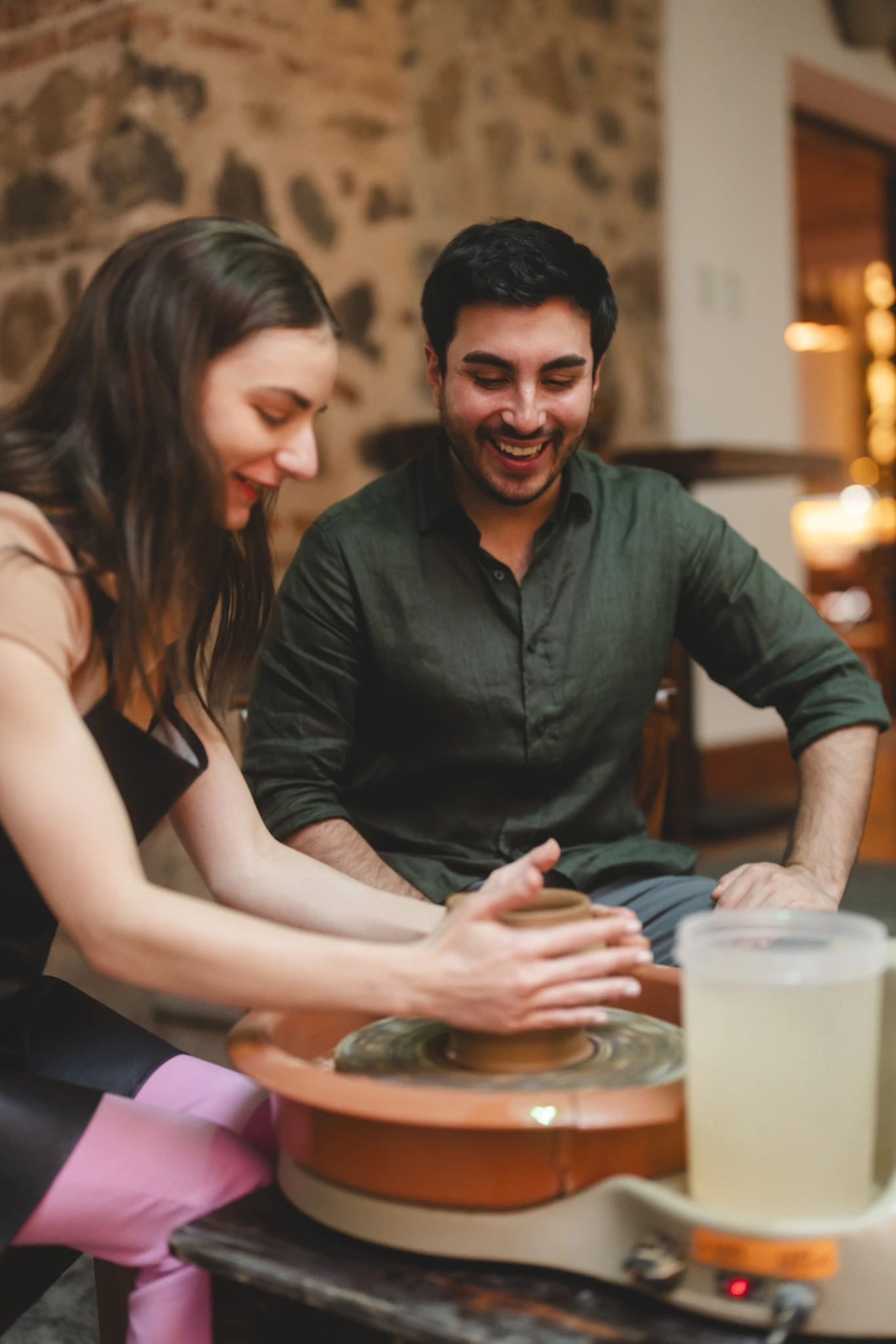
In our workshops, we also share the fundamental techniques of wheel throwing, working with the tools, materials, and methods commonly used in traditional ceramic practice. These processes provide an essential foundation for understanding the material, developing technical skills, and discovering the relationship between the hands, the clay, and the rotating wheel.
Alongside wheel throwing, we explore hand-building, one of the oldest and most organic approaches to ceramic creation. This process allows us to shape clay directly by hand, embracing its natural qualities and responding intuitively to its possibilities. Long before the development of the pottery wheel, hand-building was an essential part of ceramic production across different cultures throughout the world.
By bringing these approaches together, our studio seeks to create a space where traditional knowledge and contemporary artistic exploration coexist. We value the technical foundations of ceramics while encouraging each person to experiment, develop their own visual language, and discover the endless possibilities of working with clay.
Ceramics as a Medium for Social Connection and Personal Expression
I believe that ceramics have become an important part of contemporary participatory practices, extending beyond artistic expression to support personal growth, social interaction, and community engagement. Today, ceramics can be integrated into a wide range of contexts, including therapeutic sessions, collaborative social activities, community initiatives, and cultural centers dedicated to promoting and expanding access to the arts.
Art has increasingly found its place in both collective and individual spaces, offering opportunities for personal exploration, meaningful interaction, and shared experiences. In this context, ceramics provide a unique medium through which people can connect with themselves and others, transforming the creative process into a space for dialogue, reflection, and discovery.
I believe ceramics also offer a distinctive form of communication, one that gives shape to the abstract language of ideas, emotions, and imagination. Through the tactile experience of working with clay, individuals can explore forms of expression that extend beyond words, allowing thoughts and experiences to emerge through the material itself.
At our ceramics studio, we seek to foster an environment where these experiences can be explored, shared, and communicated through art. Our goal is to create a space that encourages creative participation, nurtures meaningful connections, and recognizes ceramics not only as an artistic discipline but also as a valuable means of personal expression and cultural exchange.